Modernizing Rural Mobility in Iowa: Region 8 Regional Transit Authority’s Journey to Coordinated On-Demand Transportation
15 minutes Date Launched/Enacted: Mar 23, 2026 Date Published: March 24, 2026
Summary
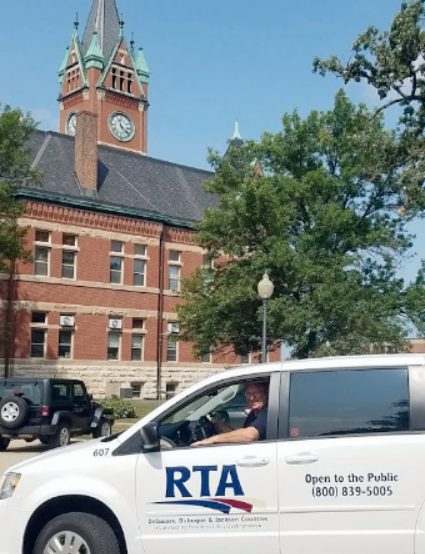
- The Region 8 Regional Transit Authority (RTA) is the rural transit system providing demand-response, door-to-door transportation, primarily for seniors and individuals with disabilities, in rural northeast Iowa.
- In 2021, the RTA and the Iowa Department of Transportation (Iowa DOT) received a Federal Transit Administration Accelerating Innovative Mobility (AIM) award for a project to modernize RTA’s demand-response transportation service through the deployment of new software to enhance efficiency and coordination.
- RTA’s project demonstrates how rural transit agencies can navigate the challenges of software transitions and adapt solutions to meet complex operational, privacy, and service needs through partnerships and collaboration.
This case study was developed as part of the Mobility Innovation Collaborative (MIC). The MIC provides a comprehensive suite of technical assistance resources, promotes knowledge sharing activities, and captures stories and lessons learned from innovative mobility projects across the United States.
Originally published March 2026.
Video description: Chandra Ravada of Region 8 Regional Transit Authoirty (RTA) and Emma Simmons of Iowa Department of Transportation discuss modernization efforts to support RTA’s demand response transportation. Credit: Shared-Use Mobility Center (SUMC)
Introduction
Rural communities in the US face challenges operating across long distances to connect communities to essential destinations. These providers play a critical role for residents with limited or no access to individually-owned vehicles, a driver’s license, or other transportation options, including seniors and individuals with disabilities. Many trips in rural areas could span across multiple counties and jurisdictions, requiring the coordination of different demand-response transportation providers to meet the unique and varied needs of rural populations. To improve coordination of these services as well as rider experience, transit agencies are adopting new technologies and engaging in innovative partnerships.
In an effort to modernize its demand-response transportation coordination and delivery, the Region 8 Regional Transit Authority (RTA) in northeast Iowa partnered with the Iowa Department of Transportation (Iowa DOT) to explore opportunities to improve coordination with partner organizations, enhance operational efficiency, and provide a better experience for riders. In 2021, the partnership won a Federal Transit Administration (FTA) Accelerating Innovative Mobility (AIM) program award for $120,000 in funding for RTA to pilot technology-based improvements to enhance demand-response services.
Background
RTA has served Delaware, Dubuque, and Jackson Counties in northeast Iowa for over 25 years, providing demand-response, door-to-door transportation services primarily for seniors and individuals with disabilities. The agency manages a fleet of 30 light-duty buses, accessible minivans, and provides roughly 100,000 passenger trips annually, serving 2,500 individuals across the three county region.
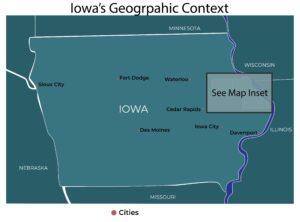
Geographic context of Iowa and RTA Service Area. Credit: SUMC
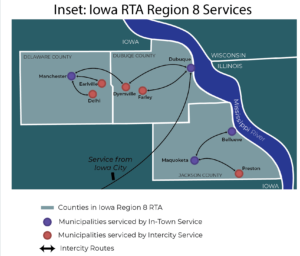
RTA Service Area Map Credit: SUMC
All RTA vehicles are wheelchair accessible and available to the general public, with reservations typically requested 24 hours in advance, while same-day service is subject to availability. RTA partners with a wide range of community organizations to expand mobility and support broader social and health outcomes, including access to medical care and other essential services. To deliver these services, RTA operates within a complex contracting environment, maintaining agreements with numerous public agencies, healthcare providers, and human service organizations, each with distinct billing structures and reporting expectations
In providing many transit services, RTA has recognized areas in the agency’s operations that could be improved upon, particularly related to managing disorganized or duplicative data, and addressing coordination with partner transportation providers. Some of these challenges are common among rural demand-responsive transportation providers due to limited staff capacity, time, and resources, and can result in barriers for riders traveling across multiple jurisdictions using different transportation service providers.
Other coordination challenges RTA faced were due to a complex contracting structure. RTA currently holds contracts with 15 organizations, including local governments, human service agencies, hospitals, and other private organizations with clients in need of transportation services. The large number of contracts and unique requirements of each agreement add to the complexity of managing operations effectively. In addition to multiprovider coordination challenges, RTA also faced a consistent driver shortage, struggling to recruit and retain enough qualified drivers to maintain its existing operations. This is partly due to the requirement that drivers operating light-duty buses, which make up the majority of RTA’s fleet, must possess or obtain a Commercial Drivers’ License (CDL).
While RTA’s services are available to any rider, a significant portion of its trips supports non-emergency medical transportation (NEMT) and transportation to other human services for seniors and individuals with disabilities. NEMT is a specific category of human services transportation that provides patients with trips to medical appointments, return trips from hospital emergency rooms, and transfers between hospitals. In rural areas like northeast Iowa, reliable transportation directly affects a person’s ability to access timely and appropriate medical care. Without it, people may miss appointments, delay treatments, struggle with inconsistent medical care, and it may contribute to and shape how people make healthcare and personal financial decisions. RTA’s services are critical to helping riders access healthcare and other essential services they need to thrive.
RTA determined that technologies to improve its demand-response operations could help address many of these coordination challenges and identified opportunities to explore both back-end and customer-facing solutions. One priority was the development of an online platform to enhance communication and coordination among partner service providers, streamlining information sharing and reducing operational redundancies. RTA also pursued a rider-facing online scheduling portal, expanding booking options beyond the traditional call-in scheduling system.
Goals
Prior to its AIM project, RTA faced operational challenges related to coordinating passenger bookings, optimizing vehicle routes, and providing riders with reliable arrival information. These issues stemmed from limited coordination and inconsistent information sharing between RTA and partner agencies regarding trip requests, rider needs, and vehicle availability. To address this, RTA launched an operational upgrade by adopting a new software platform to streamline coordination. The platform allows partner agencies to directly enter trip and client information into the system, centralizing trip information and scheduling data across providers to reduce duplicated trips and better coordinate shared rides. The software adoption also aimed to enhance the rider experience by introducing a customer-facing tool to provide real-time trip updates, including vehicle status and location.
Partnerships
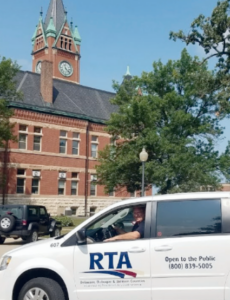
A RTA minivan transporting riders. Credit: RTA
Iowa DOT fostered several partnerships throughout the project. In addition to serving as the eligible applicant for the AIM project on behalf of the RTA, Iowa DOT was a key partner for RTA throughout the project. As the pass-through State agency eligible to receive the AIM award, Iowa DOT supported RTA in reporting, ensuring compliance, funding disbursement, and other responsibilities associated with grant administration. This structure not only advanced the project but also strengthened the collaborative relationship between the Iowa DOT and RTA. Iowa DOT extended beyond grant administration, as the agency offered guidance throughout the project by sharing critical insights, participating in regular status meetings, providing resources, and connecting RTA with other agencies leading this work. The Iowa DOT Public Transit team supports and coordinates 35 public transit systems across the state, including urban fixed-route systems and regional demand-response and on-demand systems in rural areas. Iowa DOT’s State Management Plan documents the policies and procedures used by the agency to distribute and manage funding from various FTA programs.
RTA partnered with the technology vendor QRyde to develop an on-demand booking, routing, and scheduling platform. Early in the project development, RTA and QRyde encountered challenges involving privacy and data sharing, as human service agency partners raised concerns that publicly sharing real-time vehicle locations could inadvertently reveal sensitive client information intended to remain private. This concern required adjustments to the project scope and close collaboration between both parties to address. Throughout the partnership, QRyde worked closely with RTA to make the modifications and customizations to get the system to work with the agency’s structure and operational needs. A significant adjustment to the project was the implementation of alternative methods of keeping riders informed, providing them with direct, time-sensitive notifications when vehicles are approximately 10 minutes away.
RTA also worked closely with various Transit Action Group (TAGs), composed of human service providers, transit providers, and other transportation professionals, throughout the software modernization effort. TAGs are local groups that exist at each county level in RTA’s service area, playing a central role in helping to provide ground truth and inform RTA of insights into the day-to-day elements of service. Particularly during the beginning of the software development process, TAGs were involved to guide the scoping of the project. The local TAGs supported the development of the scope of services by helping to explain community needs with knowledge from their firsthand experience. Furthermore, RTA worked closely with local disability and advocacy organizations to support the project, as a large number of RTA’s riders are seniors and individuals with disabilities.
RTA also planned to work closely with healthcare providers, such as hospitals, clinics, and chiropractors, to better coordinate patient transportation. The goal was for providers to have the ability to see RTA vehicle arrival times and plan patient appointments around that timing to improve efficiency for clients and the entire system. In practice, this goal was not fully realized due to limited staff capacity of select healthcare providers and the competing scheduling demands of larger medical facilities. Despite these partnerships not fully materializing, healthcare providers that are RTA partners can still use RTA’s online portal to request rides for their clients. RTA continues to support its human service and healthcare partners to upload client and trip information to the portal to improve system efficiency, while directly coordinating with larger healthcare providers remains an ongoing challenge.
Software Development
After relying on the same software system for 15 years, RTA recognized the need to explore a more modern technology solution to support operational efficiency and improve coordination. To address this need, funded by the AIM program, the agency partnered with QRyde to help develop solutions to enhance ride scheduling and coordination across its services.
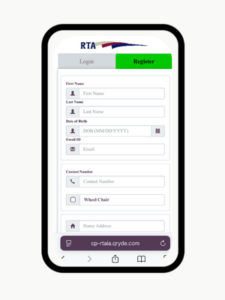
A screenshot of the Rider Registration portal on a mobile device.
A key element of the software development was the creation of a central platform designed to improve ride scheduling and address long-standing coordination challenges within RTA’s operations, such as overlapping routes and inefficient vehicle use. Under RTA’s previous system, coordination issues often resulted in multiple vehicles traveling to the same destinations or ineffective grouping of trips for riders along the same route. Since RTA’s system did not have the capacity to process the information needed to group trips, RTA sometimes dispatched several vehicles to the same city to fulfill multiple trips. The implementation of QRyde’s software platform was designed to address this by automatically generating optimized routes, grouping multiple clients traveling to the same or nearby destinations in a single vehicle to reduce duplication and making better use of available resources. To support this, an online portal was developed for human service agencies and other RTA partners to securely upload information about clients and planned trips, allowing for enhanced coordination between partner agencies. When using the portal, human service agencies can fill in information about the trip origin and destination, and the client appointment date and time.
On the rider side, the software system includes a customer facing portal for booking and scheduling rides. Users are instructed to create an account in the online portal by providing basic information such as a name, age category (child or adult), date of birth, contact information, and home address. RTA hosts a landing page on its website with step-by-step instructions on how to register. Once registered, users can schedule a ride by selecting a pickup location, destination, date, and pickup time. Alternatively, rides can be booked via phone. Riders receive notifications when their vehicle is approximately 10 minutes from arrival and can choose to receive these notifications via phone call or text message. Aware of its customer needs, RTA also provides the option for users to call the RTA dispatch office if they do not remember their login information to access the online platform.
The Software Transition
RTA’s transition to the new software system was not always a smooth process. The agency found it common for its operators and staff to compare the new software to the previous system, noting both positives and negatives of the new technology. RTA staff occasionally experienced frustration during the transition, both in the process of learning how to navigate a new software platform as well as when software malfunctions required them to troubleshoot while still managing daily operations.
RTA leadership and staff also faced the task of managing client frustrations during the launch phase. Some riders did not receive notifications or were unfamiliar with the new system, creating additional communication and support demands. These challenges were compounded by the fact that RTA serves counties with a customer base that relies heavily on phone-based communication to request services. Across the service area, 10-15% of the population lack an internet subscription. Similarly, depending on the county, an estimated 12-17% of residents do not own a smartphone, and 6-11% lack access to a computer (U.S. Census Bureau). These gaps in device ownership and the availability of reliable internet limit the use of RTA’s online portal, leading many riders to continue to schedule trips by calling in.
In response to challenges during the development stage, RTA provided additional training opportunities to help staff become comfortable with new technology and clearly communicate that the rollout would involve a transitional period with inevitable hurdles. RTA also maintained open, ongoing communication with QRyde throughout the transition, allowing issues to be identified and resolved quickly.
Operational Efficiencies
RTA also saw an opportunity to better manage its workforce and vehicle fleet using the new system. With more detailed trip and appointment information available, dispatch could optimize routes and consolidate trips more strategically, leading to RTA meeting service demands more effectively with its existing pool of drivers. This, in turn, helped to address some of the impacts from an ongoing driver shortage experienced by RTA. This improvement also prompted RTA to review its fleet composition and reexamine whether all of its larger minibuses were still necessary to adequately meet the needs of the community. Through data provided by the QRyde software, RTA gained clearer insights into ridership patterns, trip volumes, and vehicle utilization across different times of day. This analysis revealed that smaller vans, capable of carrying up to nine passengers, could often meet service demands more efficiently than minibuses. RTA subsequently began transitioning parts of its fleet from minibuses to vans. Beyond lowering operating costs, this shift also simplified driver recruitment and retention, since vans do not require a Commercial Drivers License (CDL) to operate, unlike cutaway buses. This change contributed to addressing RTA’s challenge of hiring and retaining a sufficient number of drivers to operate its services.
Challenges and Lessons Learned
RTA’s software deployment came with a variety of challenges that ultimately led to several valuable lessons for future technology projects. The nature of RTA’s service with multiple contracts, complex billing structures, and various auditing processes required far more customization than previously anticipated, resulting in longer and more difficult work during development and initial deployment with QRyde than expected. This challenge highlights the need for transit agencies to write their scope of services as detailed as possible, moving away from generic descriptions or language that could lead to misinterpretation during implementation. It also illustrates the value of a thorough RFP process to confirm expectations are clearly defined and aligned before work begins.
RTA also encountered privacy and Health Insurance Portability and Accountability Act (HIPAA) concerns from human service agency partners regarding the sharing of real-time vehicle locations. Publicly visible vehicle positions could inadvertently reveal sensitive client information, such as home addresses or travel patterns that might indicate medical appointments or participation in social and human service programs intended to remain private. In response, RTA and QRyde pivoted their approach, shifting to cellular-based text messages and calls, alerting riders when vehicles were approximately 10 minutes away. While this approach did not allow riders to view real-time vehicle locations, it still provides more timely and reliable information than previously available to riders about when their vehicle will arrive. This solution required flexibility, collaboration, and a willingness for the partnership to revise the original plan.
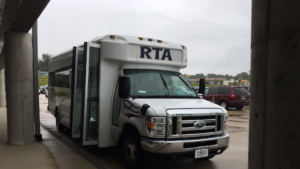
An RTA cutaway bus waiting to pick up riders at JFK Transfer Station. Credit: KCRG
Additional challenges emerged during attempts to fully automate scheduling. RTA’s on-demand system is highly variable and must accommodate complex, individual needs, such as limiting travel time for clients with disabilities or providing specific seating arrangements for certain riders, which the software struggled to account for fully. The dynamic, day-to-day nature of demand-response service added another layer of complexity, making fully automated scheduling difficult to achieve. Deploying new software is a journey that requires time, careful planning, and ongoing communication with vendors to address issues as they come up. Despite these challenges, RTA continues to pursue full automation to support as a long-term goal, anticipating that a more automated system will eventually reduce the required dispatch hours needed to operate services and allow staff resources to be shifted to other priorities, such as facility maintenance.
Conclusion
For the Region 8 Regional Transit Authority, the effort to modernize its software technology to enhance operations was an opportunity to develop more organized coordination with partners and begin moving towards fully automated scheduling and dispatch. After relying on the same software technology for 15 years, RTA partnered with QRyde to deploy new dispatching software and collaborated throughout the development process and transitional period, which presented a steep learning curve. Unexpected issues surrounding privacy concerns, contracting, on-demand service structures, and software customization required patience, flexibility, and close collaboration with partners to adapt and create new approaches.
While the transition period was challenging, deploying new software is an ongoing process that never fully ends and requires continuous communication with vendors and partners to stay aligned on key issues. RTA’s experience serves as an example of how meaningful advancements in rural mobility systems, even amid complex operational environments, can be achieved by investing in innovative technology and fostering strong partnerships.